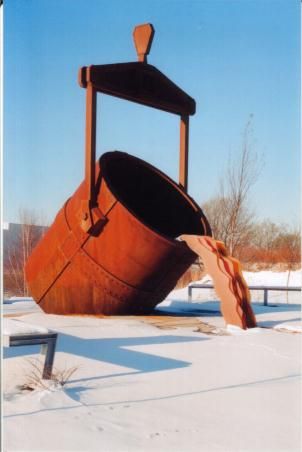
Trenton, Pictou County

Trenton, Nova Scotia

Trenton Geography

  • Official Name: Trenton
  • Gaelic Name:  Baile Na Stàilinn
  • Geographic Feature Type Category: Populated Place
  • Geographic Feature Type: Town
  • Postal Codes: The town of Trenton, uses several postal codes. The main ones are: B0K 0B1, B0K 1X0, B0K 1X1, B0K 1X2, and B2H 5C4
  • Latitude / Longitude: 45.61052, -62.639371

Trenton Maps

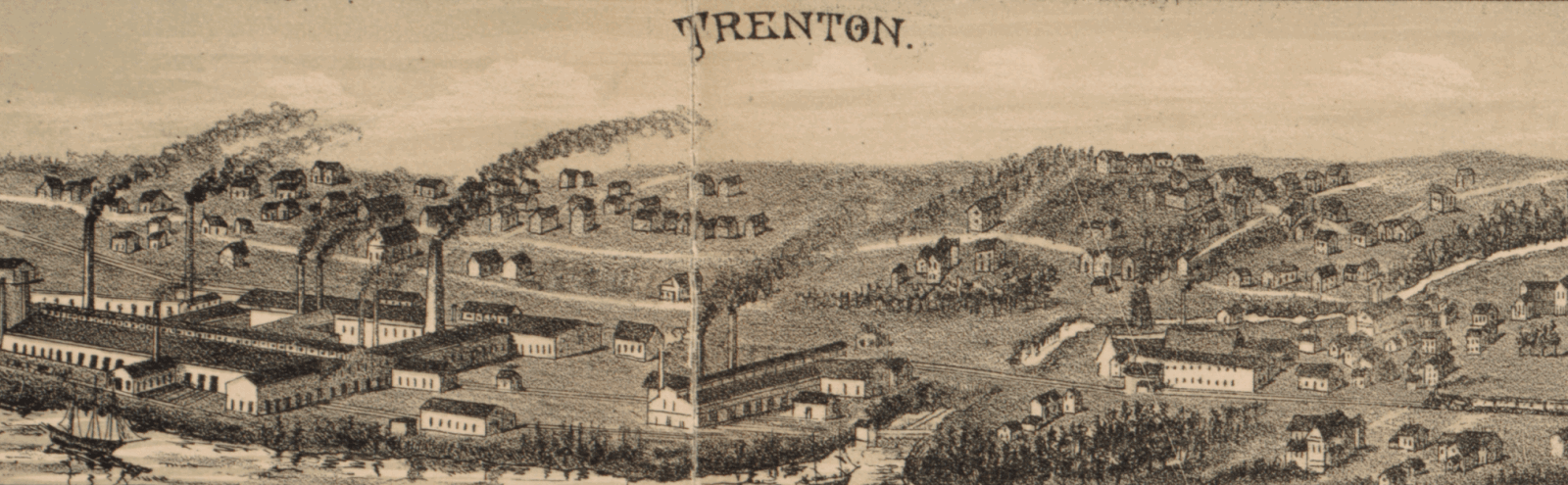
1889 Trenton Map Birds eye view map

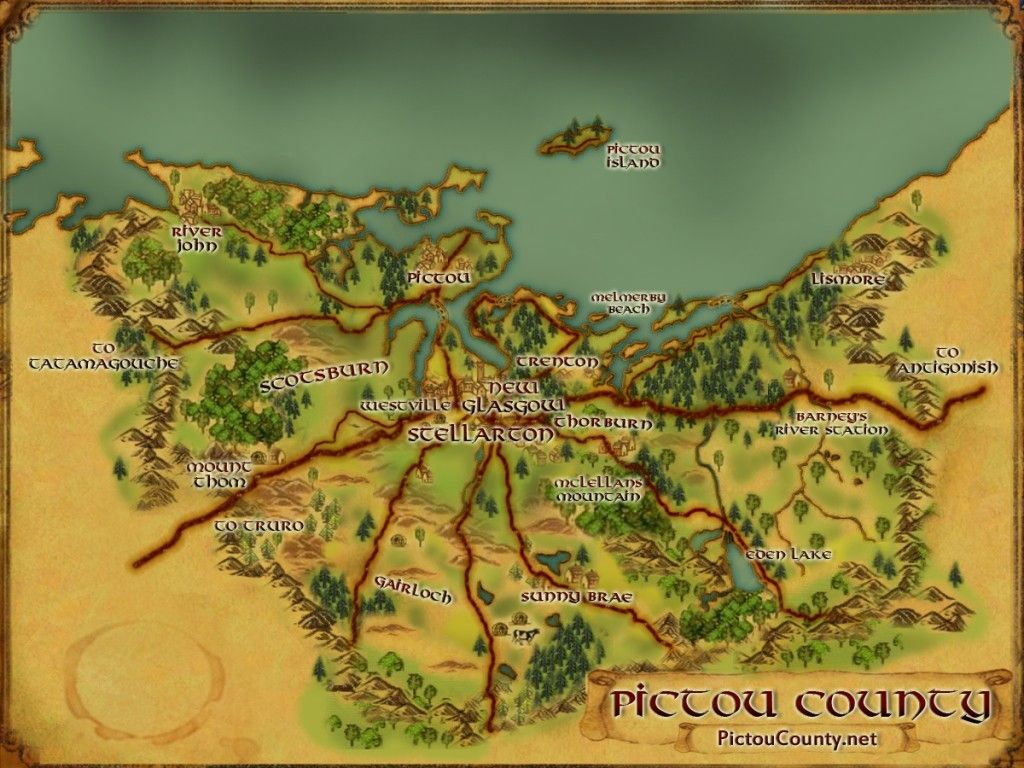
Custom Pictou County Map

Do you have any information about this place that we missed?

Then we would love for you to share your local knowledge to with us  to help us further promote the geography of Pictou County!

About Trenton, Nova Scotia

The Town of Trenton has always been known as an industrial center and is located along the east side of the East River, north of the Town of New Glasgow. An early name for the area was Smelt Brook. The Town name was eventually changed to Trenton after Trenton, New Jersey, by Harvey Graham in 1882, because it was thought that the town would be become as busy as the manufacturing capital of New Jersey.

The town was built on three lots, granted from north to south to James Spry Heaton in 1786, to James McCabe in 1792 and to Roderick McKay in 1783. In 1882, the Nova Scotia Steel Company was formed by Nova Scotia Forge Co. and other shareholders.

A number of small houses were in course of erection and land transactions were a daily occurrence. About the middle of September Harvey· Graham purchased the land from William Fraser on which he laid out the new town. House lots were auctioned off on October 19 and by November 30 quite a number of houses and one or two stores were in process of erection.

The Hope Iron Works located in New Glasgow was doing very well in 1877, but land adjoining the plant was not available to accommodate expansion. A new site was needed. Graham Fraser and Forrest MacKay made the decision to relocate to Smelt Brook. The Nova Scotia Forge Company was established in 1878, and the stage was set for another town in Pictou County.

The Nova Scotia Glass Company followed in 1881, and soon after, Humphreys and Lamont Glass Company production began. In September 1882, the Eastern Chronicle wrote that Trenton was to be the name of the new town laid out by Harvey Graham. He had established a 68-lot section of the new town, some with houses already built. Half of these lots were sold at auction in two hours! Many believed the town would grow to be as big as Trenton, New Jersey.

The Nova Scotia Forge Company plant was built at Smelt Brook in 1881. The first castings were made at the N.S. Steel plant on July 25, 1883. The first pouring of Steel in Canada took place here in 1883.

Trenton Works axle hammer (currently displayed partially downtown) had a distinct sound when operating. People would refer to it as the “heartbeat of Pictou County”, as the sound meant the plant received an order which was good news for the local economy. Trenton Works employees were noted for spending all of their paychecks within Pictou County.

Dalhousie University Archives has a guide to the TrentonWorks fonds, that includes a significant collection of archival material related to the Trenton Works factory that operated in Trenton. It also provides extensive information about Nova Scotia’s labour history and the finances and operations of national and multi-national businesses that led the industrial development of Nova Scotia.

A school-house was built in 1883.

The first store, owned by Jane Henderson, opened at the foot of Oak Street in 1881. By 1892, the more stores were operating in Trenton, including: A. Chisholm, James Leadbeater, Harvey Torey, Jane Henderson, D. Shaw. By 1883, there were 16 businesses in operation. Groceries, dry goods, hardware stores, tailoring and barbering services were available to the people living in Trenton.

In 1883, history was made in Trenton when the first steel in the Dominion of Canada was made at the town’s steel plant.

In 1901 a two-room school was completed.

A tram service came into town around 1904.

Trenton was incorporated as a town in 1911. J.B. Strickland was elected as the first mayor, and Allan J. MacDonald ,J. F. Hughes, Robert McNabb, James Powell, John C. Reid, and David Evans were all sworn in as Trenton’s first councilors.

In 1912, the Nova Scotia Steel Coal Company formed Eastern Car Company and set up a factory adjacent to the steel operations to make railway cars. This plant would change hands several times over the years.

In 1912 Trenton had a moving picture theatre. It could seat between 250 and 300 patrons. It only lasted till around 1928, and was eventually torn down in 1964.

The Eastern Car Division’s Railway Car Manufacturing Plant was built in 1912. The first rail box car rolled off the line in 1913. In 1915, it was taken over by Dominion Wheel, bought by Canada Iron Foundries in 1952 and closed down in 1962.

In 1924 another four-room school was built and in August, 1949, a new four-room school was opened. A 10-room elementary school was under construction in January, 1966.
Trenton Industries Ltd., was incorporated in 1941. The Steel Plant railway car plant and Trenton Industries became the Trenton complex, controlled by Dosco. Tibbets Paints Limited was organized in 1947.

Trenton - Nova Scotia

During World War I, Trenton branched out into shipbuilding, to replace some ships that the Canadian merchant vessels lost. Six steam cargo ships and one sailing vessel were built totaling 10,395 tons. The first of these ships was known as the “War Wasp”.

On June 29,1929, the first airplane touched down on the 320-foot grass runway at he Trenton Airport (named the Mollison Airport after James Mollison, a notable aviator. Mollison, made an early east to west crossing of the Atlantic Ocean).

In 1941, Trenton was the first airfield involved in commercial air service between Prince Edward Island and Nova Scotia.

In 2006 it was purchased by Sobeys, and is now called Trenton Airport Ltd. Eastern Air Service provides mail and grocery service to the residents of Pictou Island from the airport. Over the years, thousands have flown in and out of Trenton. Including, some of notable people such as Babe Ruth, Queen Elizabeth and Prince Phillip, Prime Ministers Lester Pearson and John Diefenbaker and Knowlton Nash

The Nova Scotia Power Commission built a thermal generating plant about 1947 and opened an extension to the plant on May 31, 1960. Other industries are Warren Maritimes Limited, Irving Oil Company, Ltd., and Robert Higgins Company Woodworkers.

Trenton Steeltown Park: One of the largest municipally owned parks in the province, it serves as a major recreational area for residents and visitors alike. The park has been a focal point for community events and activities since its opening in 1967.

Pictou County Sports Heritage Hall of Fame was built in 2025.

Population in 1961 was 3,140.

Population in 1975 was 3,044.

Population in 1990 was 2.989.

Population in 2000 was 2,881.

Population in 2011 was 2,616.

Population in 2016 was 2,474.

Population in 2021 was 2,407.

The land area of Town of  is 6.07 square kilometres

The Trenton Heritage Room, located in the Trenton Civic Building, is dedicated to preserving the history of the town and includes photos, newspapers, artifacts, and more.

Official Places located within the Town of Trenton:

Town of Trenton related Links

Town of Trenton Aerial View

Book Book

1911-2011 Trenton NS, Celebrating 100 Years

Check out the 1911-2011 Trenton NS, Celebrating 100 Years published by the Pictou Advocate, it is a great resource for learning more about the history of Trenton during its first 100 years.

  • Acadia Street
  • Albion Street
  • Anderson Court
  • Arthur Street
  • Beech Street
  • Bernards Lane
  • Birch Drive
  • Brook Street
  • Bruce Street
  • Caroline Street
  • Cavell Street
  • Centennial Drive
  • Central Avenue
  • Charles Street
  • Chestnut Street
  • Crook Street
  • Diamond Street
  • Dickie Street
  • Duchess Avenue
  • Duke Street
  • Edison Street
  • Egerton Street
  • Eighth Street
  • Eighth Street Extension
  • Eleventh Street
  • Elm Street
  • Fifth Street
  • First Street
  • Forbes Avenue
  • Forge Street
  • Fourteenth Street
  • Fourth Street
  • Fraser Street
  • Frasers Lane
  • Front Street
  • Gass Street
  • George Street
  • Glass Street
  • Grandview Avenue
  • Hampson Street
  • Helene Street
  • High Street
  • King Street
  • Little Harbour Road
  • Lower Munroe Street
  • Main Street
  • Maple Street
  • May Street
  • McKinley Drive
  • McLaren Avenue
  • Mechanic Street
  • Munroe Street
  • Ninth Street
  • Ninth Street Extension
  • North Main Street
  • Oak Street
  • Park Road
  • Park Street
  • Philip Street
  • Pleasant Street
  • Porter Street
  • Power Plant Road
  • Prince Street
  • Princess Avenue
  • River Bank Road
  • Rose Avenue
  • Scotia Street
  • Second Street
  • Seventh Street
  • Sixth Street
  • Spruce Street
  • Strickland Avenue
  • Tenth Street
  • Thirteenth Street
  • Townsend Avenue
  • Trenton Connector
  • Twelfth Street

Disclaimer

Historic details included in the Pictou County Place Names Atlas will always include source of information when available, and is intended for educational purposes (we have not taken the time to validate any claims).

Links to other sites and historic resources are shared for informational purposes; they do not necessary constitute an endorsement or an approval by PictouCounty.net. We have no control over the content on any other sites (as people can change content from time to time). We make no claims or guarantees about the accuracy or currency of the contents and expressly disclaim liability for errors and omissions in its contents.

You understand and agree that any material downloaded or otherwise obtained through the use of this website is done so, at your own risk and discretion and that you will be solely responsible for any damages to your computer system (or electronic device) or loss of data that may result from downloading any such material (or sites linked to from this site).